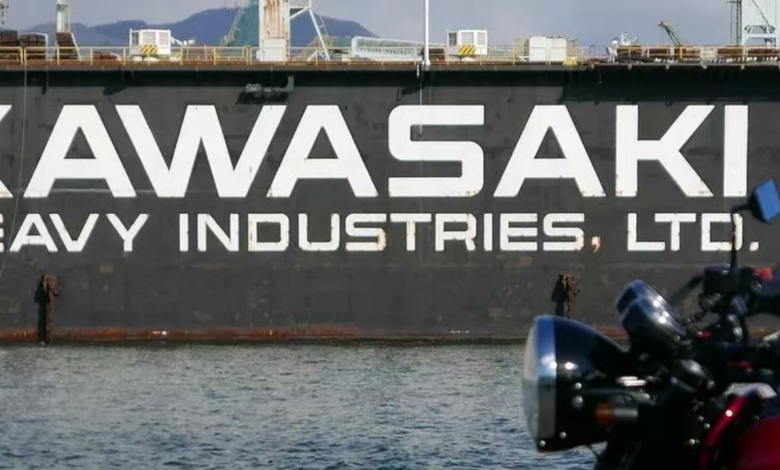
When people hear “Kawasaki,” many instantly think of roaring motorcycles speeding along highways or dominating racing tracks. Yet few realize that the same company that builds the iconic Ninja sportbikes also designs submarines, rockets, and aircraft. Kawasaki Heavy Industries (KHI), one of Japan’s oldest industrial giants with over 120 years of history, is far more than a motorcycle brand. From its base in Nagoya, Kawasaki’s Aerospace Systems division has quietly become one of the most important pillars of Japan’s defense and space industry.
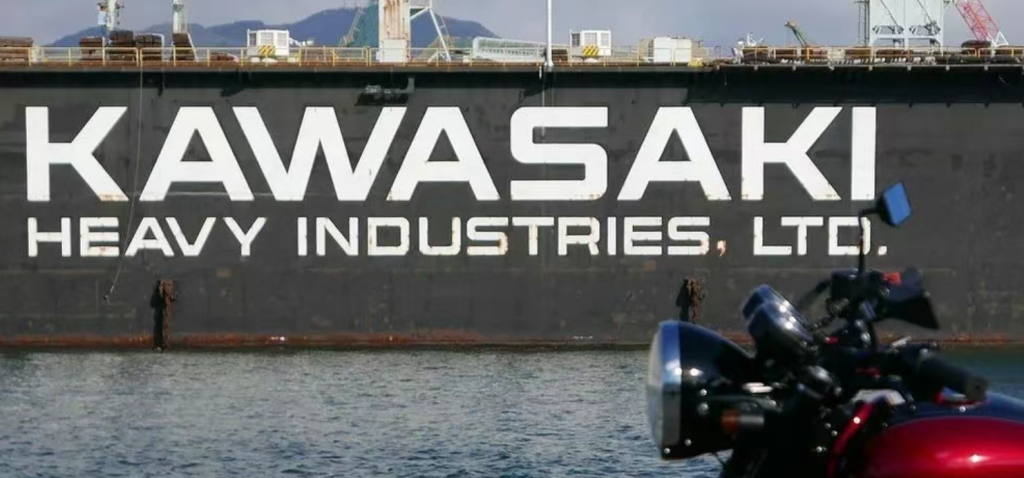
What fascinates me personally is Kawasaki’s dual identity: a beloved motorcycle maker for the public, and simultaneously, a hidden champion of aerospace engineering. This contrast makes Kawasaki a perfect example of how Japanese heavy industry combines tradition, diversification, and technological ambition.
From Shipbuilding to Aircraft: Kawasaki’s Origins
Kawasaki Heavy Industries traces its roots to 1878, when founder Shozo Kawasaki established the Kawasaki Tsukiji Shipyard in Tokyo. By 1896, it had evolved into the Kawasaki Dockyard, producing large ships such as the Iyo-maru cargo vessel. Just a decade later, the company delivered Japan’s first domestically built submarine, proving its engineering ambitions stretched beyond commercial vessels.
In the 1930s and 40s, Kawasaki was heavily involved in Japan’s wartime aviation industry. It produced legendary aircraft like the Kawasaki Ki-61 Hien (“Swallow”), the only Japanese fighter with a liquid-cooled inline engine. During the same period, it built battleships and aircraft carriers such as the Haruna and Kaga, cementing its place as a cornerstone of Japan’s military-industrial complex.
This legacy carried forward into the postwar years, when Kawasaki diversified into trains, heavy machinery, and aerospace. For Nagoya specifically, the aerospace division became a focal point of innovation.
Nagoya as the Aerospace Hub
Kawasaki’s Aerospace Systems Company, headquartered in Nagoya, plays a central role in Japan’s aviation and defense ecosystem. Its operations encompass:
- Aircraft manufacturing – producing fixed-wing and rotary aircraft for the Japan Self-Defense Forces (JSDF).
- Jet engines – design and production for both domestic aircraft and licensed programs.
- Space systems – payload fairings, launch vehicle structures, and rocket engines.
- Defense equipment – simulators, missile systems, and electronic components.
The Nagoya plants are strategically significant because they combine advanced research and development with mass production capabilities. As I see it, concentrating aerospace operations in Nagoya mirrors Toyota’s dominance in the automotive sector in the same region: both symbolize Nagoya as Japan’s “industrial capital.”
Military Aircraft: Built for the Self-Defense Forces
Kawasaki has produced some of Japan’s most important postwar military aircraft:
- C-1 Transport Aircraft (1970s) – Japan’s first domestically developed twin-turbofan military transport.
- OH-1 Reconnaissance Helicopter (1990s) – a lightweight, twin-engine rotorcraft designed for battlefield observation.
- MCH-101 Helicopter (2006) – a multi-role platform used by the Japan Maritime Self-Defense Force for mine-sweeping and transport.
- P-1 Maritime Patrol Aircraft – one of Kawasaki’s proudest achievements, designed entirely in Japan for anti-submarine and surveillance missions.
- C-2 Transport Aircraft – a modern twin-jet transport capable of carrying heavy payloads, now serving as the backbone of the JASDF’s logistics fleet.
What strikes me most is the P-1 and C-2 projects. Unlike earlier licensed productions, these were fully domestic programs, showcasing Japan’s confidence in its aerospace engineering capabilities. Nagoya became the launchpad where Japanese engineers proved they could compete with global defense giants.
Engines and Licensed Production
In addition to full aircraft, Kawasaki has long been a trusted partner for licensed manufacturing. In the 1950s, it produced the Lockheed T-33 trainer jet, the P-2H Neptune patrol aircraft, and the Bell 47 helicopter under American licenses. These collaborations gave Japan access to U.S. aerospace technology while ensuring domestic production capacity.
Kawasaki also builds jet engines—both under license and through domestic development. These engines power not only military aircraft but also support Japan’s participation in international projects such as the Boeing 767 and 777.
To me, this hybrid model—balancing original designs with licensed technology—illustrates Japan’s pragmatic approach to industrial growth. Instead of rushing into independence, Kawasaki built credibility step by step.
Kawasaki and Space: Rockets from Nagoya
Beyond aviation, Kawasaki has been integral to Japan’s space ambitions. Its Nagoya division developed payload fairings, satellite adapters, and critical systems for the H-II and H-IIA launch vehicles. Kawasaki also built Japan’s first launch pads for these rockets.
This role in space programs shows how Kawasaki’s expertise goes beyond defense—it’s about securing Japan’s presence in the global space race. Personally, I find it fascinating that a company famous for motorcycles also contributes to rocket launches. It reflects the depth and versatility of Japanese heavy industry.
Civil Aviation and International Collaboration
Kawasaki is also deeply embedded in commercial aviation. It manufactures fuselage panels, landing gear, and wing components for Boeing’s 767, 777, and 787 programs, as well as joint projects with Embraer of Brazil.
Although Kawasaki has not pursued its own commercial jet program (unlike Mitsubishi’s failed SpaceJet), its collaborative role is vital. It secures steady business, keeps its engineers globally competitive, and ensures Japan is integrated into the supply chains of major aircraft makers.
In my opinion, Kawasaki’s approach is less risky than Mitsubishi’s bold attempt with the MRJ. By focusing on components and partnerships, Kawasaki maintains a stable presence in civil aviation without overexposing itself financially.
Beyond Aerospace: The Kawasaki Identity
While aerospace is central to Kawasaki’s Nagoya operations, the company’s broader identity is fascinating. Kawasaki also produces:
- Submarines and warships for the Japanese Maritime Self-Defense Force.
- High-speed trains, including Shinkansen models and overseas metro systems.
- Industrial robots and gas turbines.
- And of course, the legendary Kawasaki motorcycles.
This diversification is both a strength and a challenge. On one hand, it makes Kawasaki resilient; on the other, it can dilute focus compared to aerospace specialists like Boeing or Airbus. Still, I think this breadth embodies the Japanese concept of monozukuri—craftsmanship across multiple domains.
Challenges Ahead
Despite its impressive achievements, Kawasaki Aerospace faces challenges. Japan’s shrinking defense budget, stricter competition in global aerospace supply chains, and the pressure of transitioning toward unmanned and next-generation aircraft are all hurdles.
Nagoya, however, remains its strategic anchor. With the Japanese government encouraging defense exports and regional security tensions rising, Kawasaki’s aerospace division may find new opportunities abroad.
Yet, in my view, Kawasaki must tread carefully. Competing with giants like Lockheed Martin or Airbus requires not only technology but also global political influence. Kawasaki’s strength may lie in specialization—doubling down on transport aircraft, patrol planes, and aerospace components rather than chasing every market.
My Perspective: Kawasaki as Japan’s Dual Icon
What I find most intriguing about Kawasaki is how it symbolizes two different worlds:
- For everyday consumers, Kawasaki is about motorcycles, lifestyle, and speed.
- For the Japanese state, Kawasaki is a pillar of defense and aerospace sovereignty.
This duality is rare and powerful. It allows Kawasaki to maintain broad brand recognition while quietly shaping national security. To me, Nagoya represents the company’s more “serious face”—a place where Japan’s engineering ambitions take flight, literally.
Lessons from Kawasaki Aerospace
Kawasaki’s story in Nagoya offers important lessons for global industry:
- Diversification builds resilience – Ships, trains, planes, and bikes all share a common engineering DNA.
- Partnerships matter – Licensed production and global collaborations accelerate domestic capability.
- Clusters create strength – Concentrating aerospace facilities in Nagoya fosters innovation and talent.
- National context matters – Kawasaki thrives because it is embedded in Japan’s keiretsu networks and defense priorities.
Conclusion: Flying Japan’s Engineering Flag
Kawasaki Aerospace in Nagoya is not just a factory complex—it is the nerve center of Japan’s aviation and space engineering. From the Ki-61 fighters of World War II to the P-1 patrol plane, from rocket fairings to Boeing fuselage sections, Kawasaki has consistently shaped Japan’s role in the skies.
While challenges remain, Kawasaki’s unique combination of defense, space, and civil aviation expertise ensures it remains a cornerstone of Japan’s industrial identity.
In my view, Kawasaki is more than a company—it is Japan’s engineering flag, flying proudly from Nagoya, representing over a century of ambition, resilience, and quiet global influence.