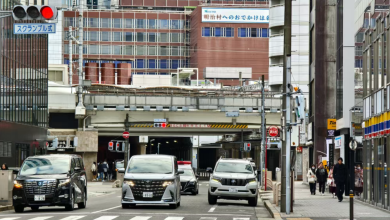
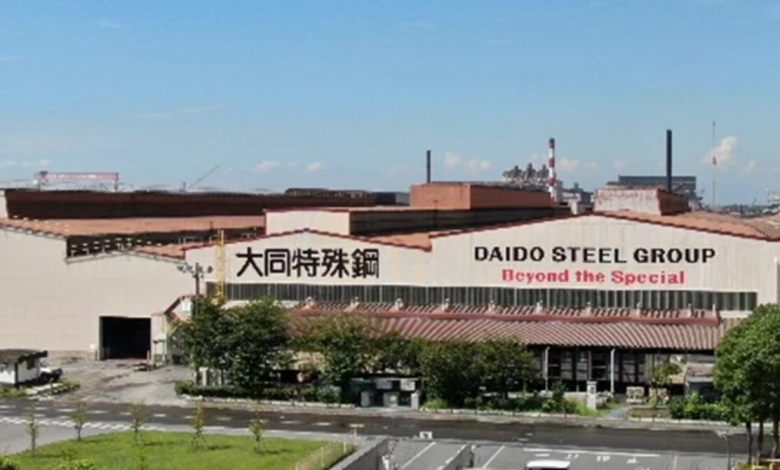
When you think of Japanese heavy industry, names like Toyota or Mitsubishi often come to mind. But hidden in the steel and sparks of Nagoya lies Daido Steel, a quiet yet crucial player that has powered industries for over a century. Founded in 1916, Daido Steel has grown into a multinational enterprise with more than 16,000 employees, eight core factories, and nearly 80 subsidiaries worldwide. From automobiles to aircraft, from shipbuilding to semiconductors, Daido’s special steels are the invisible backbone of modern engineering. As someone fascinated by Japan’s industrial DNA, I believe Daido’s story is not just about metallurgy—it’s about how a company rooted in tradition continues to lead innovation in a rapidly changing global economy.
The Birth of Daido Steel: Nagoya’s Industrial Heart
Daido Steel was born in 1916, during a period when Japan was rapidly industrializing. Its headquarters in Nagoya, located in the Chūbu region, placed it at the center of Japan’s automotive and manufacturing ecosystems. The company specialized in special steels—alloys with unique properties tailored for advanced engineering needs.
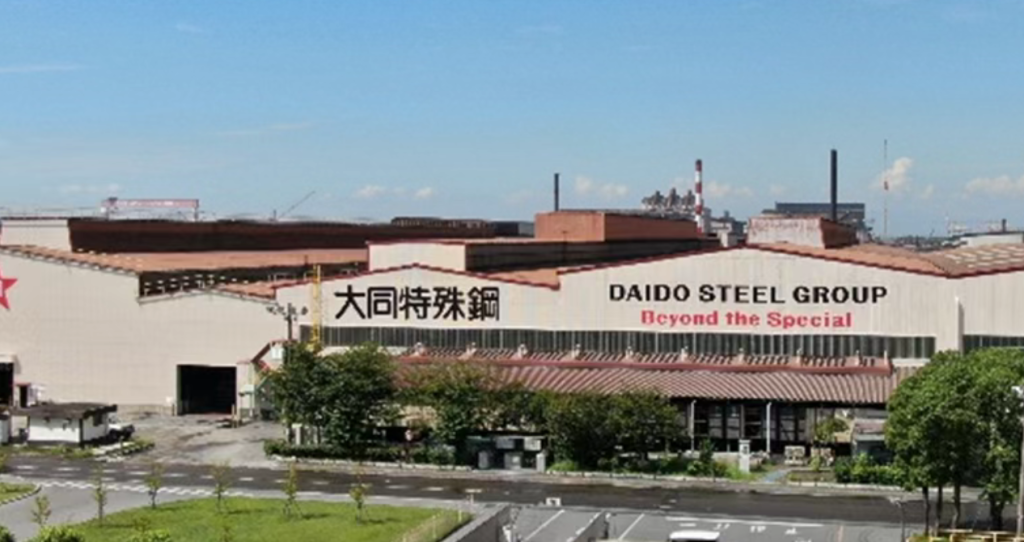
Unlike ordinary steel mills, Daido focused on high-performance materials from the beginning. By the mid-20th century, it became one of the essential suppliers for Japan’s automotive, aerospace, and heavy machinery sectors. Nagoya, also home to Toyota, Brother, and many other industrial leaders, provided Daido with a rich ecosystem of demand and technical collaboration.
From my perspective, Daido’s location is not coincidental. The synergy between Nagoya’s automakers and material suppliers created a virtuous cycle that propelled both industries forward, cementing Japan’s reputation for precision engineering.
Evolution into a Global Leader
Over more than 100 years, Daido Steel has grown into a global brand with strong footprints in Asia, Europe, and North America. Its group structure includes:
- Eight core manufacturing plants in Japan, equipped with integrated production lines.
- Over 70 subsidiaries worldwide, covering R&D, distribution, and localized services.
- A workforce exceeding 16,000 employees, unified by a commitment to innovation.
One highlight of its globalization is Daido Steel Materials Technology (Shanghai) Co., Ltd. (DSTS). This wholly owned subsidiary serves as Daido’s anchor in China, providing local industries with high-grade special steels. By tailoring solutions for automotive, aviation, and semiconductor clients in China, DSTS showcases how Daido adapts global expertise to local needs.
In my view, this global-local balance is what gives Daido resilience. While it remains deeply Japanese in identity, its integration with overseas markets ensures it can thrive beyond domestic cycles.
Integrated Production: From Smelting to Finishing
One of Daido Steel’s competitive advantages lies in its integrated production system. Unlike companies that rely on fragmented suppliers, Daido controls the entire chain—from raw material smelting to product finishing and quality assurance.
This system ensures:
- Consistency in quality – critical for sectors like aerospace and semiconductors.
- Higher efficiency – minimizing wastage and maximizing resource use.
- Sustainability – reducing environmental impact through optimized processes.
Personally, I find this approach refreshing in today’s era of outsourcing. By keeping production expertise in-house, Daido preserves its institutional knowledge and avoids the pitfalls of diluted quality. It reminds me of Toyota’s keiretsu model, where suppliers and core manufacturers grow together under shared principles of excellence.
Product Spotlight: Permalloy Foils for Advanced Applications
One fascinating example of Daido’s innovation is its Permalloy foils, branded under products like MEN™ PC-2S and DF42N.
- PC-2S (High Magnetic Sensitivity): This foil demonstrates superior relative permeability, making it ideal for high-sensitivity magnetic field applications such as sensors.
- DF42N (High Saturation Magnetic Flux Density): Designed for strong magnetic field environments, it ensures performance even under high electrical loads.
What makes these foils unique is their suppression of eddy current loss, which allows them to perform exceptionally well at high frequencies. They also boast excellent workability—they can be bent, stamped, or cut without compromising performance.
As someone who follows material science, I see this as a prime example of how Daido converts abstract metallurgy into real-world solutions. From automobiles exposed to vibration and heat, to laminated composite tapes in electronics, these foils represent how material design directly supports modern engineering.
Product Spotlight: STARMESH Targets
Another innovative development is Daido’s STARMESH target materials, engineered for electronics and semiconductor industries. These targets offer three core benefits:
- Black wiring films when layered with Al or Cu, improving circuit clarity.
- Enhanced corrosion resistance, preventing discoloration.
- Superior adhesion between wiring layers and substrates, ensuring stability.
In essence, STARMESH targets help electronics makers combine durability with performance, a necessity in high-density circuit design.
From my perspective, this demonstrates Daido’s agility. Instead of sticking to traditional heavy industries, it has embraced new markets like semiconductors and electronics, showing that steel innovation is not confined to heavy machinery—it extends to the microscopic world of circuits and chips.
Serving Key Industries: Automotive, Aerospace, and More
Daido Steel’s product range spans multiple high-value industries:
- Automotive: High-strength, heat-resistant steels for engines, transmissions, and EV motors.
- Aerospace: Lightweight alloys for structural components and turbine parts.
- Energy: Steels for power plants, nuclear reactors, and wind turbines.
- Electronics: Materials for semiconductors, sensors, and connectors.
- Shipbuilding: Corrosion-resistant steels for marine environments.
What fascinates me most is Daido’s role in the transition to electric vehicles (EVs). Its development of advanced alloys for electric motor cores and battery components shows it is not clinging to the past but actively shaping the future of mobility.
Sustainability: Steel with Responsibility
In today’s industrial world, sustainability is no longer optional—it’s a core requirement. Daido Steel has made environmental stewardship a pillar of its strategy.
- It has implemented energy-efficient furnaces to reduce CO₂ emissions.
- Its integrated system minimizes waste and enables recycling of by-products.
- The company promotes eco-friendly alloys that contribute to lighter vehicles and more efficient energy systems.
From my viewpoint, this is more than corporate PR. The fact that Daido invests in both cleaner processes and greener products indicates a genuine recognition that future competitiveness depends on environmental responsibility.
The Daido Philosophy: Craft Meets Innovation
Daido Steel’s longevity stems from a philosophy that combines craftsmanship and innovation. It respects the Japanese tradition of monozukuri (the art of making things) while pursuing advanced research.
The company invests heavily in R&D centers that focus on metallurgy, magnetic materials, and nanostructures. Collaborations with universities and global partners ensure Daido stays at the cutting edge.
Personally, I see Daido as a reminder that steel is not static. It evolves with society’s needs—from building warships in the early 20th century to powering semiconductors in the 21st. Its adaptability is its true strength.
Nagoya’s Symbol: Why Location Matters
Nagoya is more than Daido’s headquarters—it is part of its identity. The city has long been Japan’s industrial hub, balancing heavy manufacturing with innovation. Being located near Toyota, Mitsubishi Heavy Industries, and other giants has kept Daido within a network of excellence.
When I visited Nagoya, I was struck by the understated yet intense industrial culture. Unlike Tokyo’s glitter or Osaka’s commerce, Nagoya embodies a practical, engineering-driven spirit. Daido Steel fits perfectly into this ecosystem, proving how geography and culture shape corporate DNA.
Personal Reflection: Why Daido Matters Today
To me, Daido Steel represents a kind of hidden champion—less glamorous than carmakers, less visible than electronics brands, yet absolutely indispensable.
Every time we drive a car, fly in a plane, or use a semiconductor device, there is a high chance that Daido’s special steels are at work behind the scenes. Its story reminds us that industrial progress depends not only on flashy end-products but also on materials quietly enabling performance, safety, and reliability.
Conclusion: Forging the Future, One Alloy at a Time
Daido Steel’s journey from 1916 to today reflects more than a century of adaptation and excellence. Based in Nagoya, it has grown into a global leader in special steel innovation, serving industries from automotive to aerospace and electronics. Its integrated production, advanced products like Permalloy foils and STARMESH targets, and its commitment to sustainability show how a company can remain relevant in a rapidly changing world.
For me, Daido Steel is a symbol of how Japan’s industrial strength is not only about cars or planes but also about the materials that make them possible. As the world shifts toward electric mobility, renewable energy, and digital technology, Daido’s special steels will continue to be the invisible yet essential force driving progress.