
When people think of Toyota, their minds often jump to reliable sedans, hybrids, or cutting-edge mobility concepts. Yet, hidden behind the headlines of new vehicle launches is a century-old company that quietly shapes how we experience cars from the inside: Toyota Boshoku. Known for its high-quality automotive seats and interior systems, the company is not just a supplier—it’s an innovator redefining comfort, sustainability, and user experience.
What fascinates me is how Toyota Boshoku, with its roots in Japan’s textile industry, has reinvented itself over and over again. From producing fabrics in the early 20th century to supplying cutting-edge interior solutions for autonomous vehicles today, the company embodies resilience and forward thinking. In China, where electric and smart vehicles are reshaping the landscape, Toyota Boshoku’s journey is especially relevant. Its blend of tradition and adaptability provides lessons not only for the automotive supply chain but for any business facing disruptive change.
A Century of Evolution: From Textiles to Car Interiors
Toyota Boshoku was founded in 1918 as Toyoda Boshoku Corporation, originally focusing on textiles. This made sense given Toyota’s heritage—before becoming a global automaker, Toyota’s earliest successes were in looms and sewing equipment. Over time, Toyota Boshoku pivoted toward automotive interiors, developing expertise in fabrics, seating, and cabin systems.
The company’s breakthrough came as part of Toyota’s supply network. By aligning itself with Toyota Motor’s global expansion, Toyota Boshoku steadily grew into one of the world’s largest interior component suppliers. Today, it is ranked among the top-tier global suppliers of automotive interiors, with products spanning seats, door trims, headliners, carpets, and filtration systems.
Toyota Boshoku in China: Local Roots, Global Vision
For Toyota Boshoku, China is not just another market—it’s a proving ground. With new energy vehicles surging and consumer preferences evolving rapidly, the company has positioned itself at the heart of China’s transformation.
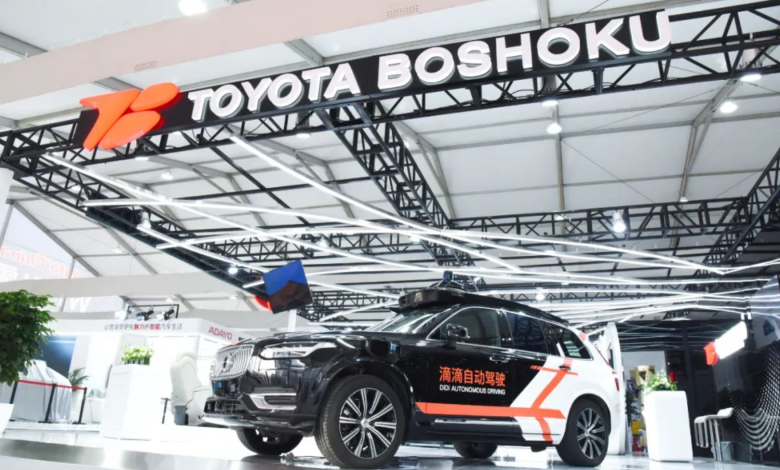
At the Beijing International Auto Show, Toyota Boshoku China showcased smart cabin concepts developed in partnership with Didi Autonomous Driving. Their Robotaxi interior solution includes features like anti-motion-sickness functions, in-seat vibration alerts, UV disinfection, and private sound headrests. These aren’t gimmicks; they reflect real user needs in China’s fast-growing ride-hailing ecosystem.
What stands out is the strategy: Toyota Boshoku isn’t just exporting Japanese designs. Instead, it actively localizes—building R&D centers, working with Chinese partners, and listening closely to customer feedback. This localized innovation is critical. As Dr. Zhuang Zhiqiang, an executive at Toyota Boshoku China, emphasized, companies must move beyond simply offering products—they must deliver solutions that anticipate and shape user experiences.
Innovation Beyond Cars: Pet Cabins and Lifestyle Concepts
One of the more surprising innovations Toyota Boshoku unveiled recently is the “Smart Pet Cabin”, co-developed with Goodbaby, a Chinese childcare brand. This cabin, built with automotive-grade safety and comfort standards, allows pets to travel securely while offering features like built-in cameras and adjustable lighting.
At first glance, a pet cabin may seem far removed from traditional seat manufacturing. But it reflects Toyota Boshoku’s philosophy: expanding its definition of “interiors” to include all forms of mobility and lifestyle needs. As I see it, this is a smart move. With younger Chinese consumers viewing cars as extensions of living space, integrating products for families, children, and even pets opens up new revenue streams while strengthening brand identity.
Meeting the Challenges of Electrification and Smart Mobility
The rise of electric vehicles (EVs) and smart cars is reshaping what consumers expect from interiors. Traditional priorities—durability, comfort, and safety—remain essential, but new demands are emerging: modular layouts, infotainment integration, and sustainable materials.
Toyota Boshoku has responded by launching concepts like the “LOUNZE Family Cabin”, a futuristic interior designed for China’s Gen-Z families. With swiveling, sliding seats and customizable lighting, the cabin transforms from a commuting space into a living room on wheels.
From my perspective, this is more than design flair. It signals a shift in how suppliers like Toyota Boshoku must operate: no longer providing “components” but holistic cabin ecosystems. For Chinese automakers under pressure to differentiate in an increasingly crowded market, partnerships with companies like Toyota Boshoku could be the key to standing out.
Lean Manufacturing: Tradition as a Strength
One of Toyota Boshoku’s defining principles is lean manufacturing—a philosophy inherited from the Toyota Production System. While some critics argue this slows down response time compared to nimble Chinese EV startups, I believe lean manufacturing remains a competitive advantage.
Why? Because in the long term, consumers still care about durability and quality. New EV players may dazzle with flashy tech, but poorly executed interiors lead to user dissatisfaction. By contrast, Toyota Boshoku’s focus on meticulous quality ensures customer trust. As Dr. Zhuang pointed out, automakers consistently choose Toyota Boshoku for the longevity and comfort of its products, a trait increasingly valued in China’s maturing market.
Sustainability and Social Responsibility
Another aspect of Toyota Boshoku that impresses me is its commitment to sustainability. The company has launched initiatives in China such as desert tree-planting projects, beach clean-ups, and student scholarships at Shanghai Jiao Tong University. Environmentally, it has introduced green materials like kenaf fiber seats and hydrogen-assisted bicycles.
In my opinion, this shows an important truth: automotive suppliers can no longer focus solely on products. They must demonstrate value to society, whether through reducing carbon emissions, supporting local communities, or investing in talent development. Toyota Boshoku’s century-long reputation is built not just on seats, but on trust and responsibility.
Lessons for Global and Chinese Automakers
What can other suppliers and automakers learn from Toyota Boshoku’s story? I see three main lessons:
- Adapt and localize – Toyota Boshoku thrives in China by co-developing with local partners rather than imposing foreign models.
- Think beyond products – Interiors today are about ecosystems, experiences, and lifestyles.
- Stick to quality fundamentals – Flashy innovation fades; durability and comfort create lasting brand equity.
For Chinese suppliers navigating rapid industry shifts, Toyota Boshoku’s example suggests that balancing speed with substance is the true key to resilience.
Conclusion: A Century-Old Company Facing the Future
Toyota Boshoku may not grab headlines like Tesla or BYD, but its influence is undeniable. Every time you adjust a car seat, recline in comfort, or experience a seamless cabin layout, there’s a good chance Toyota Boshoku had a hand in it.
From textiles in 1918 to smart robotaxi cabins in 2024, the company embodies Japan’s industrial spirit: steady, innovative, and deeply committed to quality. As China accelerates its transition toward smart and electric mobility, Toyota Boshoku’s blend of tradition and adaptation could prove a valuable model—not just for automakers, but for the entire supply chain.