In today’s world of interconnected devices and digital transformation, few industrial names are as quietly influential as Murata Machinery, Ltd. Known in Japan simply as Murata Kikai, the company has been driving innovation in factory automation, logistics, and electronic component manufacturing for decades. When I think about the rise of “smart factories” and Society 5.0—Japan’s vision for an ultra-intelligent society—Murata is one of the first companies that comes to mind. It doesn’t make consumer gadgets or flashy robots. Instead, it builds the backbone systems: automated storage, production lines, textile machines, and precision equipment that allow modern factories to function seamlessly. To me, Murata embodies the Japanese spirit of anticipating societal needs and quietly delivering the infrastructure that makes tomorrow possible.
Company Overview
Murata Machinery, founded in 1935 and headquartered in Kyoto, has grown into a global leader in automation and machinery systems. Unlike Murata Manufacturing (a separate but often-confused company known for capacitors), Murata Machinery specializes in:
- Factory automation systems
- Logistics and material handling equipment
- Textile machinery
- Machine tools and precision cutting systems
- ICT solutions for smart factories
The company employs more than 10,000 people worldwide, with offices and production sites across Asia, Europe, and the Americas. Its guiding principle is simple: “Provide the machinery and systems that support industries and enrich society.”
Historical Evolution: From Looms to Logistics
Murata Machinery started by producing textile machinery, supplying looms and spinning equipment during Japan’s industrial growth in the pre-war era. Post–World War II, the company diversified, gradually entering the fields of machine tools and automated systems.
The pivotal shift came in the 1960s and 1970s, when Murata anticipated the growing need for factory automation. It began designing automated storage and retrieval systems (AS/RS) and advanced material handling equipment. By the 1990s, Murata was already recognized as one of the pioneers of logistics automation in Japan.
From my perspective, this history reflects a uniquely Japanese trait: starting from craft-level industries (textiles) and evolving toward integrated digital systems, while retaining an emphasis on precision and reliability.
Core Business Segments
1. Factory Automation and Smart Manufacturing
Murata Machinery is a cornerstone of smart factories. It provides:
- Automated storage and retrieval systems (AS/RS)
- Warehouse management software (WMS)
- Conveyor and sorting systems
- Automated guided vehicles (AGVs) and robotics
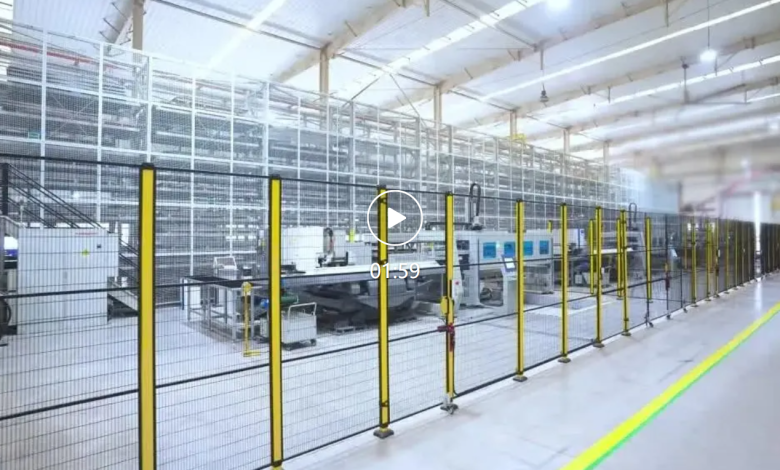
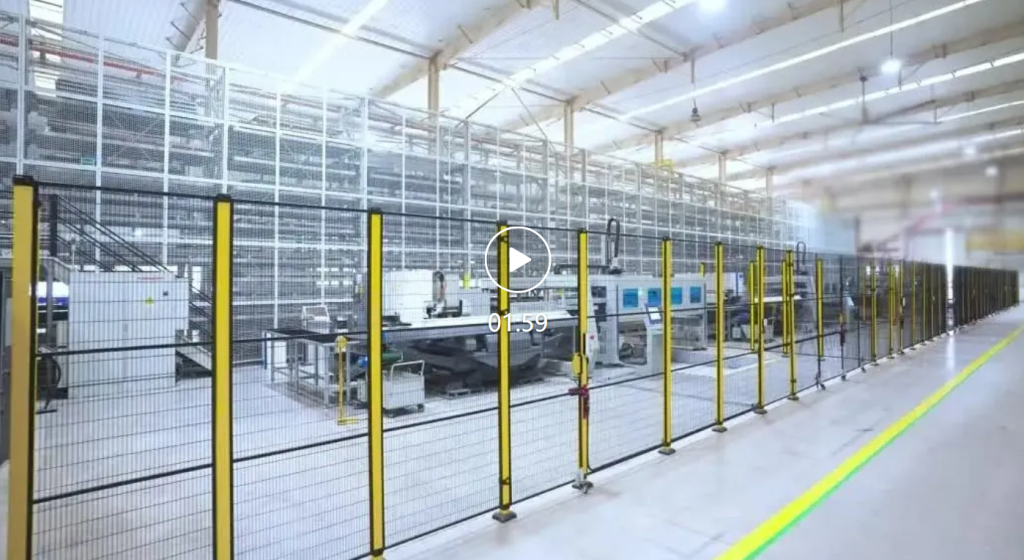
In practice, this means Murata’s technologies help companies like automakers, electronics manufacturers, and pharmaceutical firms move, store, and manage products with minimal human intervention. With Japan’s aging workforce and global labor shortages, these solutions are not just efficient—they are essential.
As someone who has visited Japanese manufacturing plants, I can attest: when you see a factory floor humming with silent, efficient systems, chances are Murata is somewhere in the background.
2. Textile Machinery
Although automation dominates its business today, Murata has never abandoned its origins. It remains a global supplier of spinning machinery, especially air-jet spinning systems that allow textile companies to produce high-quality yarn at scale. This dual identity—traditional textiles and advanced automation—gives Murata a rare balance of old and new.
3. Machine Tools and Cutting Systems
Murata also manufactures CNC turning machines and precision cutting tools. These are critical for producing components in automotive, aerospace, and precision engineering industries. While machine tools may sound less glamorous than robotics, they form the foundation of advanced manufacturing.
4. Logistics and Supply Chain Solutions
Beyond factories, Murata supports distribution centers, airports, and e-commerce warehouses. Its logistics solutions handle parcel sorting, baggage handling, and order fulfillment. With the surge of online shopping worldwide, Murata’s expertise in logistics automation has become more relevant than ever.
Murata’s Role in Society 5.0
Japan’s Society 5.0 initiative envisions a hyper-connected society where cyber and physical systems integrate seamlessly. Murata Machinery contributes to this vision in three main ways:
- Digitalized factories – turning traditional production lines into smart, data-driven ecosystems.
- Connected logistics – ensuring goods move quickly and transparently through global supply chains.
- Sustainable production – reducing waste, optimizing energy use, and enabling recycling-oriented industries.
In my opinion, Murata’s significance lies not just in its machines, but in its ability to connect islands of data and hardware into a coherent industrial ecosystem.
Green and Sustainable Innovation
Like many Japanese firms, Murata is deeply committed to decarbonization and sustainability. The company’s strategies include:
- Designing energy-efficient textile machinery that reduces power consumption.
- Integrating renewable energy storage into logistics systems.
- Optimizing warehouse layouts to minimize energy waste.
- Using recyclable materials in equipment manufacturing.
Murata has also joined global initiatives like RE100, committing to renewable energy usage in its factories. To me, this shows a recognition that automation alone is not enough; factories of the future must also be carbon-neutral.
Global Expansion
Murata Machinery operates across Asia, North America, and Europe, with subsidiaries in:
- The United States (logistics and automation solutions)
- Germany and the EU (machine tools and industrial systems)
- China and Southeast Asia (textile and automation markets)
What stands out is how Murata balances localized solutions with its Japanese engineering DNA. In China, for example, Murata adapts its logistics systems to handle high-volume e-commerce. In Europe, it emphasizes sustainable warehouse design. This flexibility is, in my view, one of the secrets behind its longevity.
Technology in Action: Case Studies
Smart Warehousing in E-Commerce
In Japan and overseas, Murata’s automated warehouses have enabled same-day delivery models. High-speed shuttles, robotic picking arms, and AI-driven order systems reduce processing times drastically.
Automotive Factory Integration
Murata’s AGVs and conveyors are widely used in car assembly plants. Instead of relying on traditional fixed lines, automakers use Murata systems to reconfigure production on demand, a critical capability in the EV era.
Textile Modernization in Asia
Murata’s air-jet spinning machines are widely adopted in India, China, and Southeast Asia, helping local textile producers achieve high-quality output at scale.
These examples highlight how Murata supports not just Japanese industry but also emerging markets adapting to global standards.
Corporate Culture: Quiet but Determined
Murata’s philosophy is deeply Japanese:
- Long-term orientation – investing in technologies decades ahead of demand.
- Collaboration – working with universities, startups, and governments on R&D.
- Discretion – avoiding flashy marketing while letting performance speak.
In my view, this culture makes Murata less visible than brands like Fanuc or Omron, yet its impact is equally profound. It’s the quiet operator that enables others to shine.
Challenges Ahead
Despite its success, Murata faces real challenges:
- Competition from Chinese and European automation firms.
- Digital disruption requiring deeper AI and IoT integration.
- Global supply chain volatility, which affects machinery exports.
- Workforce issues—as with all Japanese manufacturers, succession and talent acquisition are pressing concerns.
Yet, I believe Murata’s resilience lies in its ability to evolve. From textiles to logistics to smart factories, it has always pivoted when society demanded it.
Personal Reflection: Why Murata Matters
When people talk about Japan’s industrial strengths, they often mention cars, consumer electronics, or robotics. But I believe companies like Murata are the unsung heroes. Without its automated warehouses, same-day e-commerce would falter. Without its factory systems, Japanese manufacturers would struggle to compete globally. Without its textile machinery, Asia’s garment industry would look very different.
In short, Murata embodies a principle I admire: industrial infrastructure as a quiet enabler of prosperity.
Conclusion: The Smart Factory Backbone
So, what does Murata Machinery do? It builds the invisible but indispensable systems that power the smart factory revolution. From logistics hubs to textile plants, from CNC machines to automated warehouses, Murata is shaping the infrastructure of Society 5.0.
Its future depends on how well it can integrate AI, IoT, and sustainability into its already-strong hardware. If history is any guide, Murata will not just keep pace—it will continue leading quietly, ensuring factories and supply chains evolve for decades to come.
For me, Murata Machinery is proof that true industrial leadership doesn’t always make headlines. Sometimes, it’s the silent revolutions inside warehouses and production lines that matter most.