As an automotive professional, any trip to Japan would be incomplete without a stop in Nagoya—the birthplace and operational hub of Toyota Motor Corporation. Toyota is not only the world’s largest carmaker by volume, but also one of the most profitable, with a business model that has remained remarkably steady compared to the volatile valuations of newer entrants like Tesla.
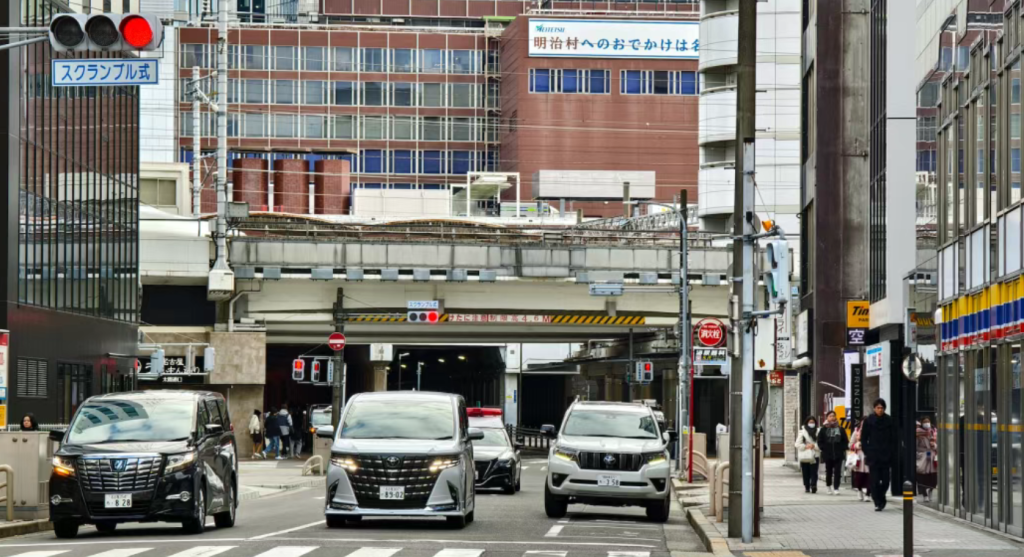
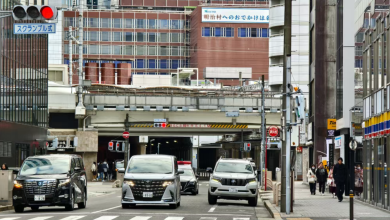
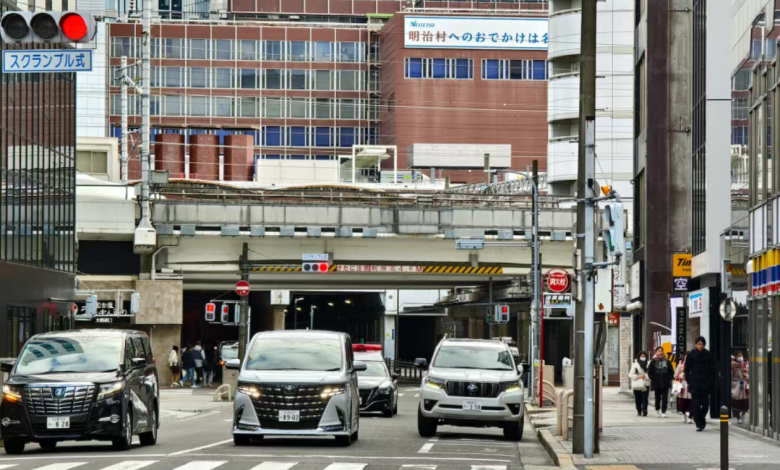
Nagoya, though not a typical tourist destination, has become synonymous with Toyota’s rise. It is home to multiple manufacturing plants, including those that serve as the “mother factories” for joint ventures like GAC Toyota and FAW Toyota in China. Walking through Nagoya, it is hard not to notice the overwhelming dominance of Japanese brands on the roads—especially Toyota—where small and compact models, rarely seen in China, thrive.
Nagoya as a Global Automotive Microcosm
Nagoya’s success story offers insights for China’s automakers, especially in second- and third-tier cities. Japan’s automotive market reflects a miniature version of the global industry: economical cars for domestic use, SUVs for North America, and hybrids or EVs aligning with European preferences.
Toyota’s strategy has never been about covering every possible segment globally, but rather about dominating chosen niches and tailoring models to local needs. For instance, Toyota still produces exclusive microcars and compacts for Japan, while discontinuing the Camry domestically despite its global fame. The lesson for Chinese automakers is clear: success does not require being everything to everyone. Instead, focusing resources on strengths—like Wuling’s MINI EV, Great Wall’s off-road Tank series, or GAC’s MPVs—can create unbeatable niches.
Local Roots, Global Reach
Toyota’s dominance in Nagoya underscores how a city and a corporation can grow together. Replicating a “Nagoya-Toyota” model in China could mean more than building cars—it could stimulate regional economies, create employment, and establish local pride.
China already has regional automotive giants: FAW in the northeast, SAIC in the east, Dongfeng in central China, and GAC in the south. Yet, none fully commands local markets the way Toyota does in Nagoya. Instead, Chinese brands often fall into repetitive investment and overcapacity, driven more by competition than by customer needs. Nagoya proves that genuine local integration—making cars that are the undisputed choice for local users—builds a foundation for global expansion.
Beyond Manufacturing: Rental, Service, and Experience
Toyota’s influence is not limited to manufacturing. In Japan, car rental is an essential part of the automotive ecosystem, with rental stations clustered around Nagoya Station. Well-maintained fleets, strong brand presence, and excellent service turn rentals into rolling advertisements.
By contrast, China’s short-lived EV rental boom exposed weak service standards, poor maintenance, and fragmented brand image. For Chinese automakers, a strong rental and after-sales ecosystem could become a powerful tool for customer acquisition, much more effective than relying solely on online leads.
Equally important is Toyota’s attention to service. Even in an age of AI and automation, Toyota emphasizes human interaction—from in-store experiences to knowledgeable sales staff. Buying a car is not just a transaction but a long-term relationship, one that requires trust, support, and service throughout the vehicle’s lifecycle.
Lessons for Chinese Automakers
China’s auto industry is at a historic peak, with quality and sales improving rapidly. Yet, true global influence requires more than just products; it requires systems—service, after-sales, rental, and community integration.
The Nagoya model demonstrates how a local stronghold can serve as a launchpad for global dominance. For Chinese brands like BYD, Geely, Chery, and others, the challenge is not simply to produce more cars, but to build deeper connections with local markets and create service ecosystems that foster loyalty.
As Toyota shows, even the world’s largest carmaker succeeds by tailoring to specific markets, mastering niches, and integrating with its community. For China’s automakers facing the pressures of “involution” (内卷), perhaps the question is not how to run faster, but how to run smarter—just as Toyota has done from its home in Nagoya.